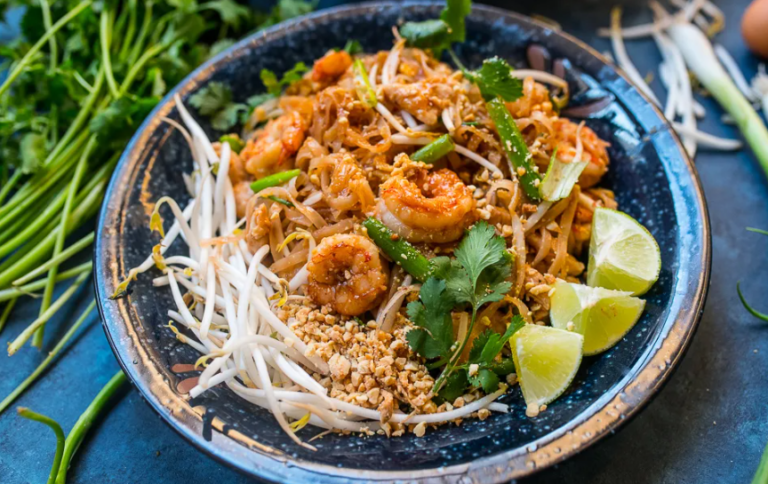
Thailand’s national dish started as a political campaign and became a global obsession. What is pad Thai beyond those tangled noodles at your local takeout spot? The answer involves rice noodles dancing with tamarind, fish sauce creating umami depth, and a what is pad thai 1930s prime minister who wanted Thailand to have its own cultural identity.
The result changed how the world thinks about Thai food.
Street vendors in Bangkok perfected this dish over generations, each adding personal touches while respecting the foundation.
Today, pad Thai represents Thai cuisine globally, yet most versions outside Thailand miss crucial elements. Understanding what pad Thai really means, exploring the balance of sweet, sour, salty, and spicy that defines Thai cooking philosophy.
The Historical Stir-Fry Story
Pad Thai emerged during the 1930s when Prime Minister Plaek Phibunsongkhram promoted nationalism through food. The government distributed recipes, held competitions, and gave away noodle carts. Genius marketing before marketing existed.
The dish combined Chinese stir-fry techniques with distinctly Thai flavors. Rice noodles replaced wheat. Tamarind brought sourness instead of vinegar. Palm sugar added sweetness. Fish sauce provided a salty foundation. This fusion created something entirely new while feeling traditionally Thai.
World War II rice shortages made noodles a practical alternative. Economic struggles made street food essential.
Pad Thai solved multiple problems while tasting incredible. Sometimes the best dishes come from necessity rather than luxury.
The Ingredient Symphony
What is pad Thai without understanding its components?
Rice noodles form the base, specifically sen lek (thin flat noodles) that absorb flavors while maintaining texture. Fresh noodles work best, but dried versions soaked properly deliver excellent results.
- Tamarind paste brings its signature tanginess.
- Fish sauce adds umami without fishiness when used correctly.
- Palm sugar balances with caramel sweetness.
Together, these three create the holy trinity of pad thai sauce. Ratios matter more than recipes here.
Proteins vary beautifully. Shrimp is traditional, tofu is welcomed, and chicken is common. Eggs scrambled through add richness. Dried shrimp ground fine intensifies flavor. Bean sprouts bring crunch.
Chinese chives add subtle onion notes. Preserved radish delivers unexpected depth.
Peanuts crushed fresh provide texture contrast. Lime wedges let diners adjust acidity. Chili flakes allow personalized heat. The garnishes aren’t afterthoughts but essential components.
The Technique That Matters
Wok Hei, that elusive charred flavor from proper wok cooking, separates good pad thai from transcendent versions. High heat, constant movement, and perfect timing create this magic. Home stoves rarely achieve the necessary temperatures, frustrating ambitious cooks.
Professional technique involves cooking ingredients separately before combining. Noodles soften without becoming mushy. Proteins cook through without rubberizing. Vegetables maintain a crunch. The final toss brings everything together in seconds, not minutes.
Sauce distribution requires finesse. Too much creates soup. Too few leaves leave bland spots. The noodles should glisten, not swim. Each strand should carry flavor without being overwhelmed by it.
The Americanization Situation
American pad thai often bears little resemblance to Thai versions. Ketchup replaces tamarind. Soy sauce overwhelms fish sauce. Sugar dominates subtlety. Broccoli appears inexplicably. The result tastes fine, but it isn’t pad Thai.
These adaptations happened gradually. Ingredients unavailable led to substitutions. American palates preferred sweetness. Restaurants accommodate preferences. Evolution or degradation depends on perspective.
Understanding authentic versions helps appreciate variations. Some improvements work. Many don’t. Knowing the original lets you judge innovations fairly.
See also: Vitamin D Foods in Hindi
The Home Kitchen Reality
Making proper pad thai at home challenges even experienced cooks. Sourcing ingredients requires specialty stores.
Achieving proper temperatures requires powerful burners. Timing everything perfectly demands practice.
CookinGenie chefs bring solutions. They source authentic ingredients through restaurant suppliers. They understand technique nuances. They adapt professional methods to home kitchens. Most importantly, they deliver restaurant-quality pad thai without you leaving home.
The Delicious Conclusion
What is Pad Thai? It’s Thailand’s successful attempt at creating national identity through food. It’s the perfect balance of flavors that defines an entire cuisine. It’s proof that government programs occasionally produce delicious results.
More personally, Pad Thai represents accessibility. Complex flavors from simple ingredients. Street food has elevated to global recognition. A dish that welcomes modifications while maintaining its soul.
Whether you attempt making it yourself or let CookinGenie professionals handle the complexity, understanding pad thai means appreciating how food carries culture across borders and generations. Every properly made plate tells Thailand’s story, one delicious noodle at a time.