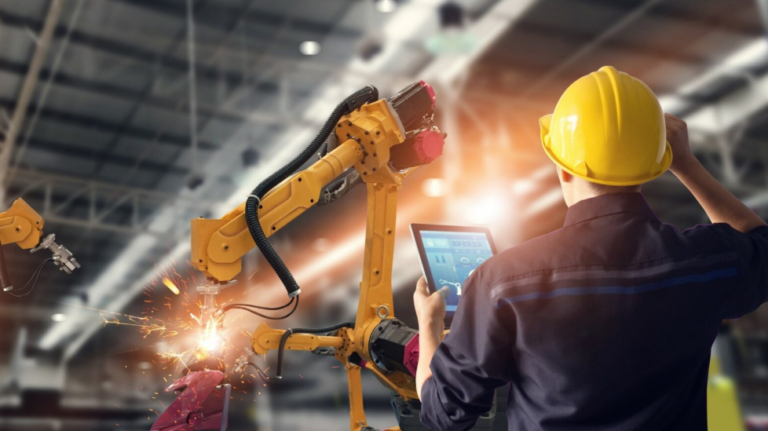
A robotic welding machine is no longer just a tool for large-scale factories, it’s now an opportunity for small businesses to compete on equal footing. With rising demands for precision, faster turnaround times, and safer operations, robotic welding allows smaller companies to deliver high-quality results while keeping costs under control.
Adopting robotic welding helps small businesses boost efficiency, satisfy clients, and remain competitive against larger companies. This article explains how small businesses can use robotic welding machines to become more competitive and succeed in today’s manufacturing industry.
Understanding Robotic Welding Machines
Robotic welding machines are advanced automated systems designed to perform welding tasks with high accuracy and efficiency. Instead of relying on a human welder to control the torch, these machines use robotic arms programmed to move precisely and consistently along predefined paths.
They are widely used in industries such as automotive, construction, aerospace, and shipbuilding, where consistent quality and high productivity are essential. The main benefits include:
- Higher accuracy – Robots consistently produce precise and repeatable welds, ensuring high-quality results.
- Greater efficiency – They can operate continuously, reduce downtime, and complete tasks faster than manual welding.
- Improved safety – Robotic welding keeps workers safe by handling dangerous conditions such as extreme heat, sparks, and toxic fumes.
- Better consistency – Welds are uniform, which reduces waste, rework, and overall production costs.
The process typically involves programming the robot’s movements, securing the workpiece in place, and letting the robotic arm guide the welding torch. In many cases, sensors and vision systems are added to track seams, monitor quality, and adjust in real time for maximum precision.
Robotic welding machines are transforming manufacturing by making welding faster, safer, and more reliable, while also ensuring consistent results and higher productivity across industries.
See also: The Latest in Green Technology for Compact Skid Steer Loaders
Why Robotic Welding Matters for Small Businesses
Robotic welding is becoming a game-changer for small and medium-sized businesses (SMBs). It helps them compete better, improve safety, and increase profits. Here’s why it’s important:
Meeting Customer Demands for Quality
Customers expect consistent, high-quality products. Robotic welding delivers uniform welds with precise control over speed, heat, and wire feed, resulting in:
- Fewer defects and less rework.
- Stronger, cleaner, and more attractive welds.
- Compliance with industry standards.
Consistent quality builds customer trust and encourages repeat business.
Faster Production and Delivery
Robots can work continuously, producing more parts in less time. This allows businesses to:
- Meet tight deadlines.
- Handle larger orders.
- Respond quickly to changing market needs.
By automating repetitive tasks, robots allow workers to focus on more complex work, improving overall productivity.
Safer Workplaces
Welding can be dangerous due to heat, UV light, sparks, and fumes. Robots reduce human exposure, which:
- Lowers the risk of injuries.
- Reduces insurance costs.
- Helps comply with safety regulations.
Cost Savings Over Time
Although robotic welding requires a significant upfront investment, it saves money in the long run by:
- Cutting labor costs.
- Reducing material waste and energy use.
- Improving profit margins.
Investing in robotic welding helps SMBs stay competitive and grow sustainably.
Robotic welding enhances quality, accelerates production, improves safety, and reduces costs for small businesses, making it a valuable long-term investment.
Advantages for Small Businesses
Robotic welding helps small businesses boost productivity, quality, safety, cost-efficiency, and flexibility. Key benefits include:
Increased Productivity
Robots work continuously, completing tasks faster and increasing output, which allows businesses to handle larger orders and serve more customers.
Improved Quality and Consistency
Robots reduce human error by following precisely programmed paths, ensuring defect-free welds. They provide standardized, consistent welds that meet industry standards and minimize rework.
Cost Savings
Robots make precise welds, which cuts down on wasted materials, rework, and extra labor. They also reduce the need for overtime or additional shifts, helping businesses save money over time despite the upfront cost.
Enhanced Safety
Robots handle welding in dangerous environments, keeping workers safe from heat, sparks, UV light, and harmful fumes.
Flexibility in Operations
Robots can be easily reprogrammed for new tasks or products, making them ideal for small-batch or custom jobs and helping businesses meet a variety of customer needs.
Robotic welding helps small businesses produce higher-quality products faster, safer, and more efficiently. It also provides flexibility for custom jobs and long-term cost savings, making it a smart investment for growth and competitiveness.
How Small Businesses Benefit from Robotic Welding
Robotic welding is now helping small businesses work faster, improve quality, and enhance safety. Here’s how different industries are using it:
Automotive Parts Suppliers
Small companies that make brackets, chassis parts, or exhaust systems use robots to weld with precision and speed. This reduces mistakes, saves time, and ensures they meet strict quality standards while handling larger orders.
Construction and Infrastructure
In construction, robots weld beams, columns, and plates. They can be programmed for different tasks, speeding up assembly and improving safety on site.
Metal Fabrication Shops
Small workshops use robotic welding to tackle complex or repetitive tasks. Robots deliver consistent results, allowing these shops to take on more projects and keep customers happy.
Agricultural Machinery Makers
Robotic welding helps manufacturers of tractor parts and farming equipment produce faster and more efficiently.
By adopting robotic welding, small businesses can boost productivity, improve quality, and stay competitive. Robots are scalable, flexible, and a smart investment for the future of manufacturing.
Overcoming Barriers to Robotic Welding Adoption
High Upfront Costs
Barriers: Robots have high upfront and ongoing costs, including safety, software, training, and maintenance, and can become outdated quickly due to fast-paced technological changes.
Solutions: Use flexible financing, government incentives, phased adoption, ROI analysis, and alternative ownership models.
Training Employees
Barriers: Employees may lack robotics skills, resist changes, and face safety risks when working with robots.
Best Practices: Provide hands-on and role-specific training, continuous education, involve employees early, communicate clearly, and enforce safety protocols.
Choosing the Right System
Barriers: Overspending on over-capable systems or underspending on insufficient ones.
Solutions: Define requirements, prioritize flexibility, pilot-test, assess total cost of ownership, and plan for scalability.
Small businesses can boost efficiency, quality, and competitiveness by adopting robotic welding with proper planning and support.
Conclusion
Robotic welding isn’t just for big factories, it gives small businesses a real chance to compete. It helps them work faster, deliver higher-quality products, improve safety, and adapt to different projects. While costs, training, and choosing the right system can be challenging, careful planning, good vendor support, and starting small make it manageable. In the end, robotic welding helps small businesses save time and money, maintain consistent quality, and stay competitive, making it a smart investment for the future.