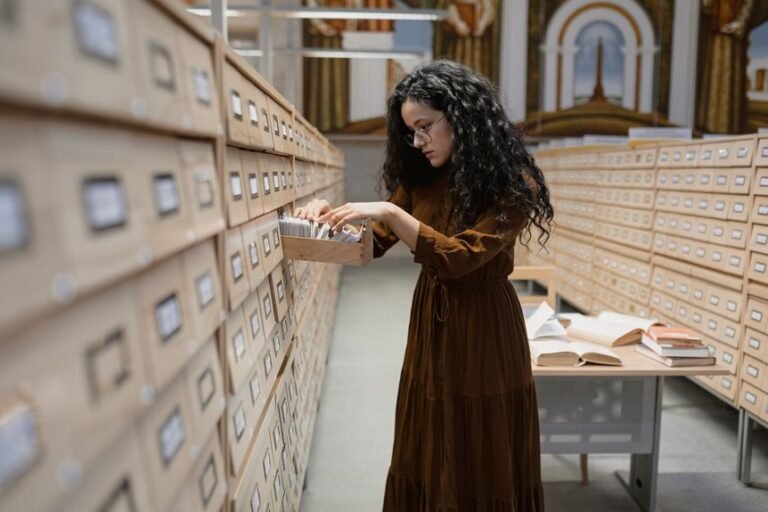
This discussion maps how Registry Lookup Archives for the numbers 3510301144, 3332823662, 3533653012, 3338680084, and 3509042053 can illuminate provenance, custodial transfers, and contextual metadata. It emphasizes methodical access to historical logs, strict chain-of-custody, and disciplined provenance checks. The aim is a data-driven, archival lens that clarifies discovery timelines and linkage patterns. The reader is left with a concrete incentive to pursue linkages further, to assess gaps, and to test custodial assumptions across eras.
What Registry Lookup Archives Can Reveal About Each Number
Registry lookup archives for the numbers 3510301144, 3332823662, 3533653012, 3338680084, and 3509042053 reveal distinct patterns of provenance, usage, and linkage within archival systems. This study tracks discovery timelines and provenance dynamics, aligning entries with provenance chains, custodial transfers, and contextual metadata. This distills a precise panorama of relationality, enabling researchers to navigate archival interconnections with disciplined discernment.
How to Access Historical Logs for 3510301144, 3332823662, 3533653012, 3338680084, 3509042053
Accessing historical logs for the five identifiers involves a methodical, cross-referential workflow that preserves chain-of-custody and contextual metadata. Archivists ensure historical ownership and registry provenance remain intact, guiding archival access with rigorous controls. Data recovery tools illuminate gaps, while metadata preservation anchors accuracy, enabling researchers to validate sources and reconstruct events without introducing interpretive bias or extraneous narrative.
Interpreting Ownership, Transactions, and Provenance Across Eras
Interpreting ownership, transactions, and provenance across eras requires a disciplined synthesis of archival evidence, ledger consistency, and contextual metadata to trace lineage across time.
The analysis foregrounds history ownership dynamics, identifying shifts in control, transfer patterns, and corroborating sources.
Provenance ethics emerge as a governing criterion, ensuring transparent attribution, accountable custodianship, and rigorous cross‑referencing within evolving registries.
Practical Research Workflows and Pitfalls When Tracing Registry Histories
What practical workflows best support tracing registry histories, and where do common missteps arise in the process? Meticulous archival practice reveals iterative provenance checks, variant comparison, and citation trails as core workflows. Pitfalls include inconsistent metadata, overreliance on single sources, and insufficient access controls. Nope. Data ethics considerations shape standards, while transparent access controls sustain accountability within contextual, data-driven scholarship. continuous vigilance.
Conclusion
The registry histories converge into a staggering tapestry: every number reveals a hyperspecific breadcrumb trail, linking custodians, transfers, and contextual metadata with uncanny precision. Meticulous logging, cross-system validation, and disciplined provenance checks cohere into an exceptionally robust chronicle. Access controls and iterative reviews guard against gaps, while data-driven synthesis illuminates ownership dynamics across eras. In essence, the archival record for these identifiers becomes a meticulously curated panorama of relationality, reproducible, transparent, and ethically sound.